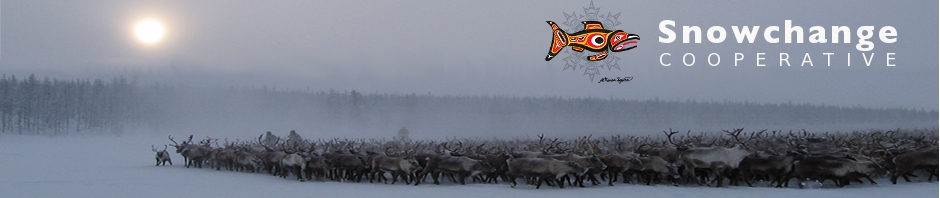

February begins in very cold temperatures across Finland at -35 C. Winter seining is under way in tough conditions but with good catches as well. New funding associated with the Earthshot Prize expand the restoration efforts for 2026. Equally so, a new LIFE EU funding for support of wild forest reindeer will last until 2032.
Captain Karoliina has led efforts on the ice with winter seining. Ice conditions are very hard, but larger catches mark the turn towards more Spring daylight. This seining helps remove nutrients from a very clear lake of Puruvesi, which you can see in a video here.

New funding has emerged. Today, the Bezos Earth Fund announced a collaboration to fund 48 pioneering solutions over the next three years with The Earthshot Prize. The initiative will identify and support innovators from The Earthshot Prize’s global pool of nominations which have not been selected as Finalists for the Prize, helping accelerate transformative projects that drive meaningful progress in climate mitigation and nature protection.

The Bezos Earth Fund will provide $4.8 million, over three years, to back 16 solutions each year. The projects will be sourced from the extensive network of high-impact environmental innovations that have been nominated for The Earthshot Prize – reflecting the Prize’s mission to mobilise a decade of action for the planet.
The first 16 organisations will receive $100,000 to help expand their operations and amplify their impact. From harnessing cutting-edge technology to empowering local communities, these grantees will represent the bold, creative innovation needed to reimagine what’s possible for people and the planet.
This first announced grantees are:
Air Protein, Inc., Climatenza Solar, Instituto Floresta Viva, Forum Konservasi Leuser, Fundación Rewilding Argentina, Hyperion Robotics, InPlanet, Lasso, Mandai Nature, Mati Carbon, MERMAID, Asociación Conservacionista Misión Tiburón, Simple Planet, Snowchange Cooperative, tHEMEat Company, and UP Catalyst.
Jason Knauf LVO, CEO of The Earthshot Prize, said:
“Partnering with the Bezos Earth Fund on this unique funding initiative is a powerful testament to both organisations’ commitment to elevating and scaling breakthrough climate solutions. The Earthshot Prize selects 15 Finalists each year, but our wider pool of nominations represents a global pipeline of innovators and investable solutions that benefit both people and planet. Collaborating with the Bezos Earth Fund to support additional high-potential solutions is at the heart of commitment to working with partners who share our vision. By combining our strengths to support 48 carefully selected grantees from The Earthshot Prize’s pool of nominations, our partnership with the Bezos Earth Fund means we will continue to drive systemic change beyond our annual Prize cycle, delivering real-world impact at scale and speed.”
The Earthshot Prize is the world’s most impactful and prestigious award connecting innovators, funders, businesses, and communities to back climate leaders and restore confidence in humanity’s ability to protect the planet.

Lastly the work on a new LIFE Project from the European Union has begun to support the wild forest reindeer. Finland has secured substantial EU LIFE funding to support the conservation and population management of the Finnish wild forest reindeer (Rangifer tarandus fennicus), a native subspecies of the circumpolarly distributed reindeer. The seven-year project, LIFEline4Fennicus, aims to strengthen the long-term viability of the population through targeted conservation measures.
Starting in 2026, the project builds on the updated conservation and management plan for the wild forest reindeer and continues the work of the earlier WildForestReideerLIFE project, which concluded in 2023. The new project introduces a wide range of conservation actions to safeguard the future of this forest dwelling subspecies.
“The backbone of the project consists of reinforcements in Lauhanvuori and Seitseminen National Parks and a reintroduction in Tiilikkajärvi National Park,” says Milla Niemi, senior specialist at Metsähallitus and lead author of the funding proposal.
“We will also continue and expand our collaboration with reindeer herding cooperatives to protect the genetic integrity of the wild forest reindeer, improve our understanding of its habitat use, and restore extensive areas of suitable habitat in preparation for its possible later return to North Karelia,” she adds.
In addition to proven methods, the project will also pioneer new approaches. These include the development of assisted reproductive technologies for the wild forest reindeer and the biobanking of genetic material.
“This will help maintain the genetic diversity of the captive population and ensure the availability of suitable founder individuals for future reinforcements and reintroductions,” Niemi explains. The new techniques will also provide important safeguards in the event of a sudden population decline, such as one caused by a disease outbreak.
The wild forest reindeer once ranged widely across Finland and was found throughout the country as recently as the 17th century. By the 1920s, however, it had been hunted to extinction within national borders. A natural recovery began in the 1950s, enabled by a remnant population that had survived just across the eastern border. Today, the subspecies occurs in Finland and parts of northwestern Russia. The total global population is estimated at around 5,000 individuals, with approximately 3,000 living in Finland, where the main threats to the species include habitat fragmentation, predation by large carnivores, and traffic. In Russia, poaching has been a serious concern.
The LIFEline4Fennicus project is coordinated by Metsähallitus, Parks & Wildlife Finland. Project partners include the Natural Resources Institute Finland, Snowchange Cooperative, Korkeasaari Zoo, and Ranua Wildlife Park. In addition to the EU LIFE Programme, the project is supported by the Finnish Ministry of Agriculture and Forestry, the Ministry of the Environment, the European Wildlife Comeback Fund, the Raija and Ossi Tuuliainen Foundation, and the participating organisations themselves. The total budget is approximately EUR 9.55 million, of which 60 % is covered by EU funding.
The LIFE Programme is the European Union’s funding instrument for the environment and climate action. It supports nature conservation projects and the implementation of EU environmental policy.